
The small fibers that are separated from the cloth surface while they are spinning within your washer are known as lint. If the lint of one cloth is attached with another, an extra dust-like layer will appear and the filter is used to catch the lint. But, when the filter itself becomes clogged with lint, how to clean lg washing machine filter top loader to unclog it?
Here I will describe the simplest way of cleaning the filter so you will be able to follow the tips for your LG top loader effortlessly.
Cleaning the LG top loader washing machine filter:
At the bottom of your washer scuttle, you will find a crescent-like plastic lint filter. When the machine is running, water forces away the lint off from the bottom side and flows down the drain. Usually, these filters do not require replacement or cleaning. But, in the case of standard top loader or top loader machines, you need to locate the water pump filter and clean the lint, buttons, coins, hair, etc. to avoid slow drain.
- Access the filter. You should find it from the back side of the washing machine. Detach it from the machine.
- Some washing machines may have non removable filters. In that case, you will need to clean it with an old toothbrush or scrubber.
- A paper towel can easily remove the sticky lint from the filter. Or, you can use an old toothless for this task.
- Rinse the filter with hot water. It will help to remove the fabric and detergent residue that clogged the filter.
- Do not forget to check inside of the machine, too. If loose lint remains there, remove them or peel them off.
- Take aside the screen of the filter. Now soak it in the vinegar-water mixture, or in hot water for ten minutes.
- The excess lint will be loosened from the filter after some time. Clean the excess lint using the same toothbrush or paper towel.
- You will also need to clean the location of the filter as that place contains hair, dirt, lint, and other residues, too. Clean the place using a brush.
- Attach the filter with the washer and run the empty washer to make sure the parts have been properly placed.
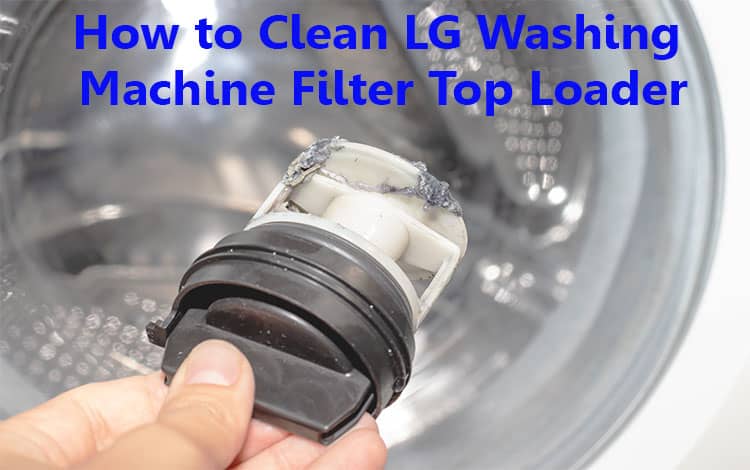
If your washer is new, it has a self-cleaning pump filter instead of lint traps. All you need to do is to run the wash cycle empty once a month. This will remove the excess lint, odors, and other residues from the pump filter.
That’s how you can clean the lint filters of an LG washing machine. Some washers come with disposable filters. You don’t need to clean them, just throw them out and place new filters.
FAQ:
1.Do newer LG top loader washers have filters?
Answer: The newer washing machines with high-efficiency technology do not have any removable or cleanable lint trap or filter whether they are front-loading or top-loading washers. Instead of filters, they have pump filters to take away lint from the washer. The cleaning cycle helps to keep your washer disinfected and clean. But if you find lint, it is because the pump may be clogged.
2.How can I find the filter of my top loader washer?
Answer: You can easily find the filter of your top-loading washer by checking the owner’s manual. If you can’t find the manual, follow these places to locate the filter—
- End of the hose drainage,
- Under the center agitator,
- At the upper rim of the drum,
- Behind the small hatch, etc.
Usually, these are the places where the filters are located.
3.Can you use bleach to clean your LG washer?
Answer: Yes, you can use bleach for cleaning your LG washer, but you should only add liquid bleach to the compartment that is marked for bleach. Also, do not forget to follow the recommendations of the manufacturers. When you are using the Tub clean cycle, you will need to use ¾th cup of bleach to the dispenser. Using bleach frequently or too much bleach will cause damage to the fabrics.
Conclusion:
Cleaning the filter of a top loader LG washing machine is a task that might feel unnecessary, but when it becomes blocked, you will face difficulty while cleaning the clothes. If you don’t want the lint attaching to your clothes, or a poor water flow when the washing machine is running, you will need to clean the filter at least three to four times a year.
